Introduction
For many years, translation was seen as a simple equation:
👉 Know two languages → become a translator
But in 2026, this is no longer true.
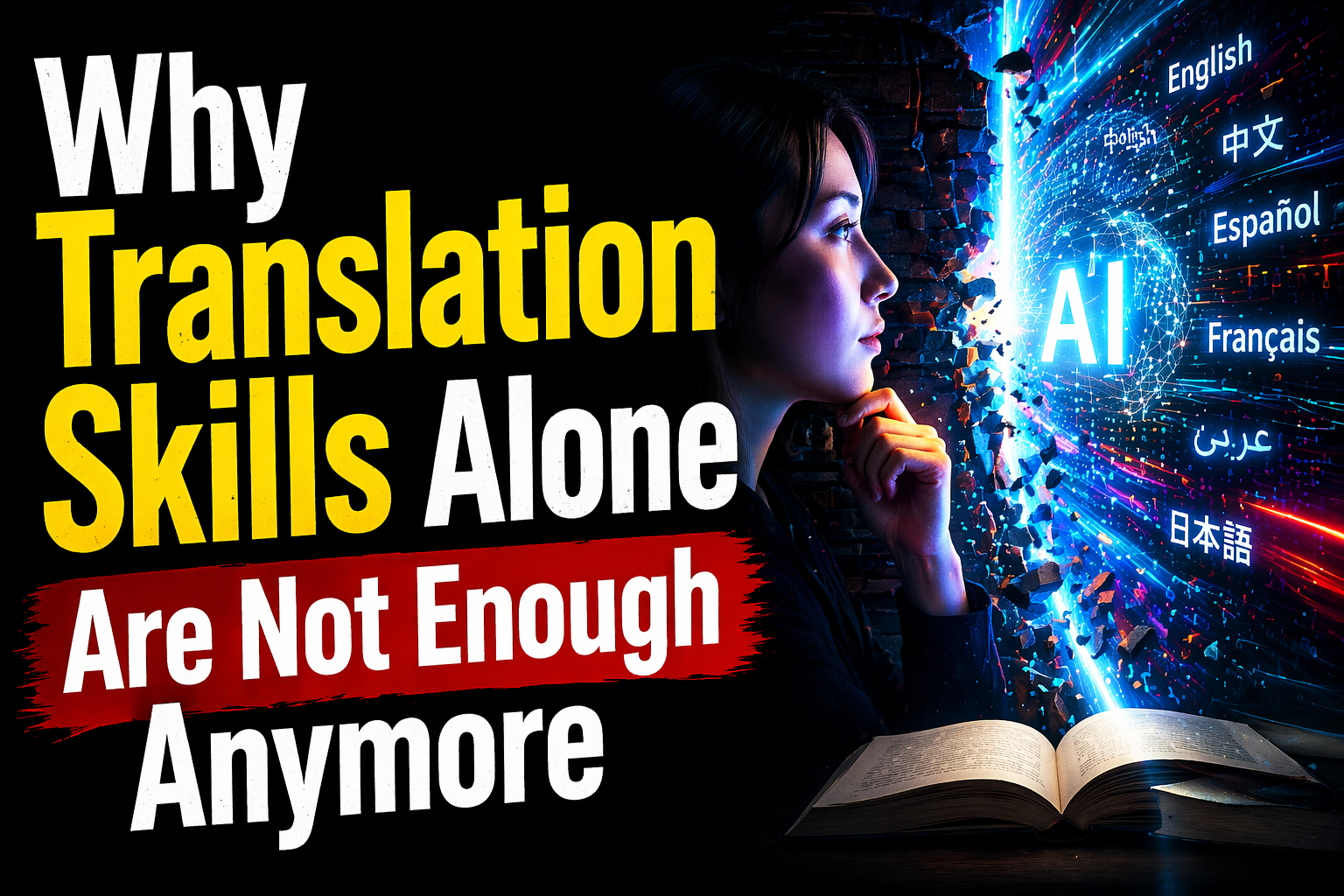
With the rise of AI tools like ChatGPT, DeepL, and Google Translate, basic translation skills are no longer enough to succeed.
👉 The industry has changed—and so must translators.
In this article, we’ll explore why translation skills alone are no longer sufficient and what you need instead to stay competitive.
1. The Old Assumption: Language = Value
In the past:
- Knowing two languages was rare
- Translation required manual effort
- Skills were difficult to replace
👉 Language ability itself had high value.
2. The New Reality: AI Can Translate
Today, AI can:
- Generate fluent translations
- Handle large volumes instantly
- Provide “good enough” quality
👉 This reduces the value of basic translation skills.
3. The Problem: Commoditization
When a skill becomes common, its value drops.
What Happens:
- More competition
- Lower rates
- Less differentiation
👉 Basic translation is becoming a commodity.
4. What Clients Actually Want Now
Clients no longer want just translation.
They want:
👉 Accuracy
👉 Reliability
👉 Expertise
👉 Risk reduction
👉 These go beyond language skills.
5. The Shift: From Translator to Decision-Maker
The role is evolving.
Old Role:
- Translate text
New Role:
- Evaluate AI output
- Make decisions
- Ensure quality
👉 Translators are becoming decision-makers.
6. The Skills That Matter Now
To stay relevant, you need more than translation skills.
🔥 Key Skills:
① Editing and Post-Editing
Refining AI-generated output
② Domain Expertise
Specializing in fields like patent, legal, medical
③ AI Literacy
Using AI tools effectively
④ Critical Thinking
Understanding context and intent
👉 These create real value.
7. The Gap Between Average and Top Translators
The difference is widening.
Average Translators:
- Focus on words
- Compete on price
Top Translators:
- Focus on meaning
- Provide expertise
- Use AI strategically
👉 This gap determines income.
8. Real-World Example
Two translators:
Translator A:
- Works manually
- No specialization
Translator B:
- Uses AI
- Specializes
- Focuses on quality
👉 Translator B earns more and works more efficiently.
9. The Biggest Mistake
👉 Believing that language skills alone are enough.
This mindset leads to:
- Stagnation
- Lower income
- Lost opportunities
10. What You Should Do Instead
🚀 Strategy:
- Combine translation + AI
- Develop specialized knowledge
- Focus on value, not volume
👉 This is the future-proof approach.
11. Final Insight
Translation is no longer just about language.
👉 It’s about:
- Understanding
- Decision-making
- Value creation
Conclusion
Translation skills alone are no longer enough in 2026.
But this is not bad news.
👉 It’s an opportunity.
For those who evolve, the rewards are greater than ever.
The question is not:
👉 “Are your language skills good enough?”
It is:
👉 “What additional value can you provide?”





コメント