Introduction
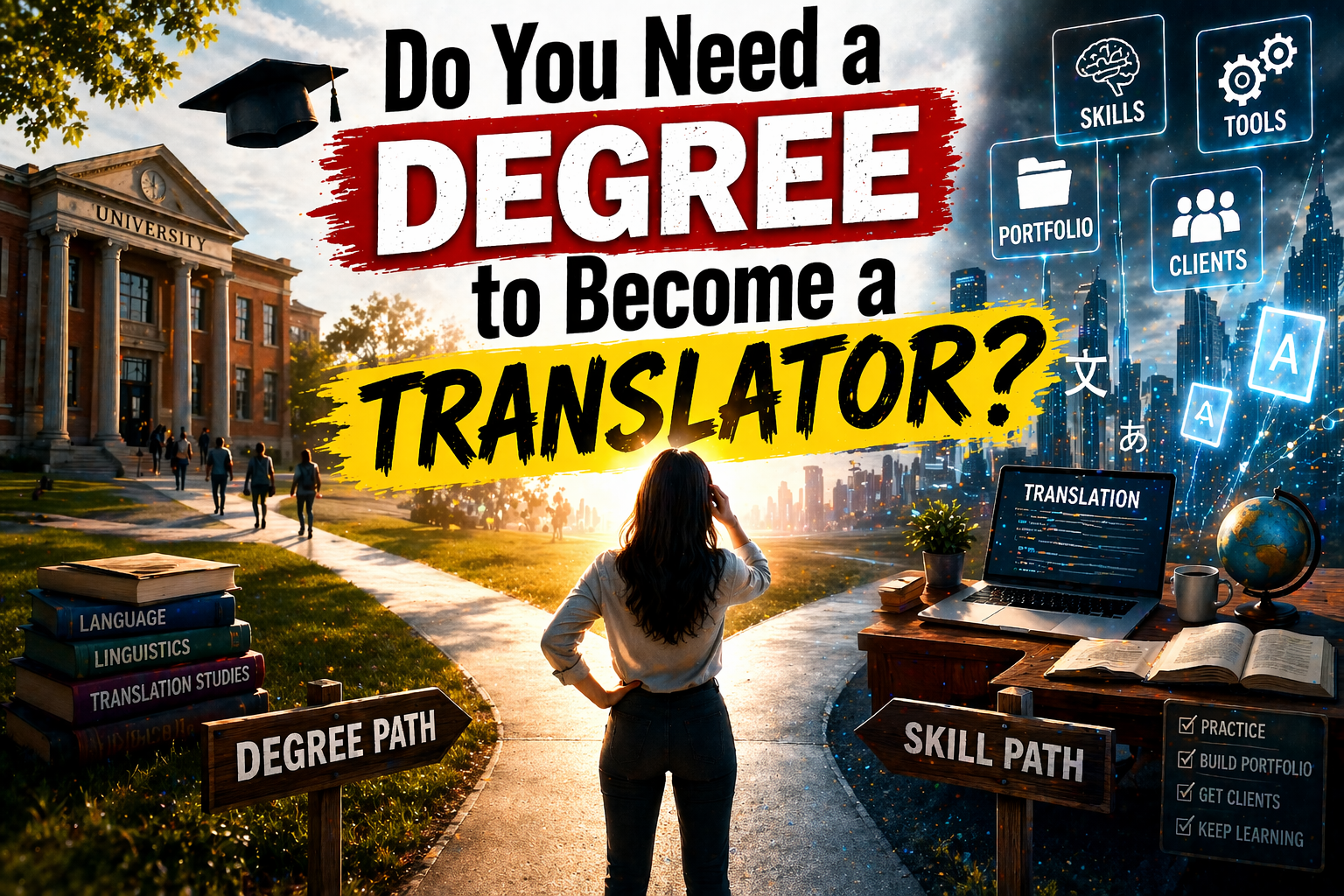
Do you need a degree to become a translator?
It’s one of the most common questions beginners ask—especially in 2026, where AI tools like ChatGPT and DeepL are transforming the industry.
Many people assume that a formal degree in translation or linguistics is required.
But is that really true?
👉 The short answer: No, you don’t need a degree.
In this article, we’ll explain why, what actually matters, and how you can start a translation career without formal qualifications.
1. The Short Answer
👉 No, a degree is not required to become a translator.
While a degree can help, it is not a strict requirement—especially in freelance and online work.
2. What Clients Actually Care About
Most clients don’t ask:
👉 “Do you have a degree?”
They ask:
👉 “Can you deliver accurate, reliable work?”
What Matters More:
- Translation quality
- Consistency
- Meeting deadlines
- Communication
👉 Results matter more than credentials.
3. Why Degrees Matter Less in 2026
The industry has changed.
Key Reasons:
① AI Has Lowered Barriers
Tools like AI translation systems help beginners start faster
② Portfolio > Diploma
Clients prefer proof of skill over academic credentials
③ Freelance Economy
Online platforms prioritize performance, not degrees
👉 Skill has replaced formal education as the main requirement.
4. When a Degree Can Help
To be fair, degrees are not useless.
They can help with:
- Getting in-house jobs
- Academic or research translation
- Building foundational knowledge
👉 But they are optional—not mandatory.
5. What You Actually Need Instead
If not a degree, then what?
🔥 Essential Requirements:
① Strong Language Skills
Clear writing and comprehension
② Editing Ability
Improving AI-generated text
③ Basic Domain Knowledge
Understanding specific topics
④ Consistency and Reliability
Meeting deadlines and expectations
👉 These are what clients pay for.
6. The Power of a Portfolio
A portfolio replaces a degree.
What to Include:
- Sample translations
- Before/after edits
- Short explanations
👉 This shows real ability.
7. How to Start Without a Degree
Step-by-Step:
① Learn basic translation workflow
② Practice using AI tools
③ Build a small portfolio
④ Apply for beginner jobs
👉 You can start within weeks.
8. Common Misconceptions
❌ “I need a degree first”
No—you can start now.
❌ “I’m not qualified”
Skills can be built quickly.
❌ “Clients won’t trust me”
Proof of work builds trust.
9. Real-World Example
Many successful translators:
- Started without degrees
- Learned through practice
- Built portfolios over time
👉 Experience beats theory.
10. Final Answer
👉 A degree can help—but it is not required.
What matters is:
👉 Your ability to deliver value.
Conclusion
You don’t need a degree to become a translator in 2026.
The industry values:
👉 Skill
👉 Consistency
👉 Results
If you focus on these, you can build a successful translation career—degree or no






コメント