Introduction
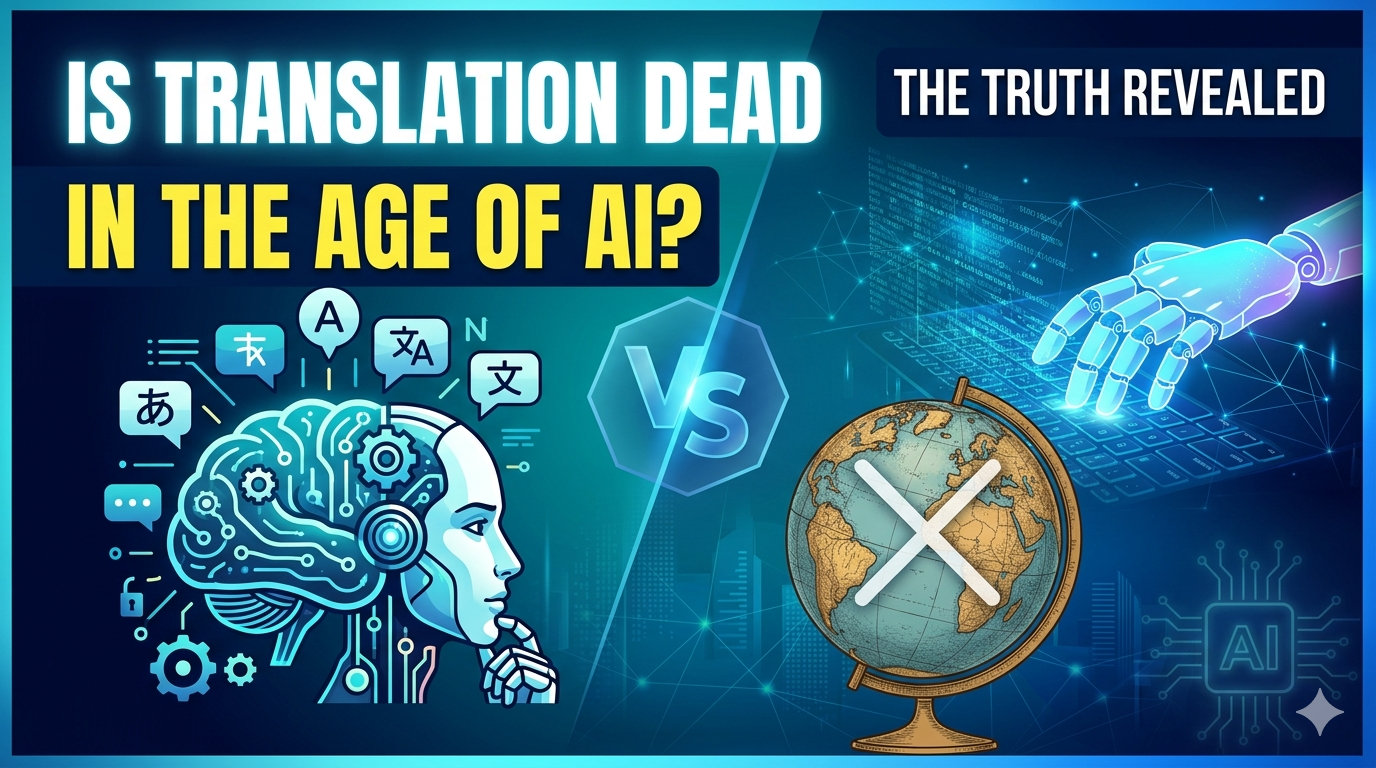
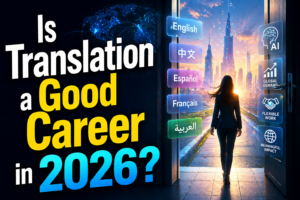
With the rapid rise of AI tools like ChatGPT, DeepL, and Google Translate, a critical question has emerged:
Is human translation becoming obsolete?
At first glance, the answer might seem obvious. AI can now translate entire documents in seconds—faster and cheaper than any human.
But the reality is far more complex.
In this article, we’ll uncover the truth about the future of translation, what AI can (and cannot) do, and why translators who adapt will not only survive—but thrive.
1. Why People Think Translation Is “Dead”
There are three main reasons behind this belief:
① Speed and Cost
AI can process thousands of words instantly, often at near-zero cost.
② Acceptable Quality (On the Surface)
For general content, AI output is “good enough” for casual use.
③ Accessibility
Anyone can now translate content without professional training.
👉 These factors create the illusion that translation is no longer a valuable skill.
But this is only surface-level thinking.
2. What AI Translation Still Cannot Do
Despite its impressive capabilities, AI has fundamental limitations:
❌ Lack of Deep Context Understanding
AI predicts language statistically. It does not truly understand meaning.
❌ Inability to Handle Complex Structures
Legal, patent, and technical texts require precise logical interpretation.
❌ No Responsibility or Accountability
AI cannot take responsibility for errors—humans must.
3. Translation Is Not “Words” — It’s “Structure”
This is the key insight most people miss.
Translation is not about replacing words.
It is about reconstructing meaning structures.
For example:
- Legal contracts → logical dependencies
- Patents → claim structures and technical relationships
- Medical texts → cause-effect precision
AI often fails because it treats language as sequences, not structures.
👉 This is where advanced frameworks like Codex-based translation thinking become powerful.
4. The Rise of “AI-Augmented Translators”
Instead of replacing translators, AI is creating a new category:
👉 AI-Augmented Translators
These professionals:
- Use AI for speed
- Apply human judgment for accuracy
- Reconstruct meaning beyond surface text
This hybrid approach is already becoming the industry standard.
5. Which Types of Translation Are at Risk?
Let’s be realistic.
🔻 High Risk (Commoditized)
- Simple blog articles
- Basic product descriptions
- Casual communication
🔺 Low Risk (High Value)
- Patent translation
- Legal documents
- Financial reports
- Medical content
👉 The more precision and responsibility required, the more valuable human translators become.
6. The Real Future: From “Translator” to “Meaning Architect”
The role is evolving.
Future translators are not just language converters—they are:
👉 Meaning Architects
They:
- Interpret complex structures
- Make high-level decisions
- Ensure consistency and intent
This shift separates amateurs from professionals.
7. Final Verdict: Is Translation Dead?
No. Translation is not dead.
But:
👉 Low-level translation is dying.
👉 High-level translation is becoming more valuable than ever.
Conclusion
AI is not the end of translation—it is a filter.
It eliminates those who rely only on surface-level skills.
But for those who understand structure, context, and meaning…
👉 This is the greatest opportunity in the history of translation.




コメント