Introduction
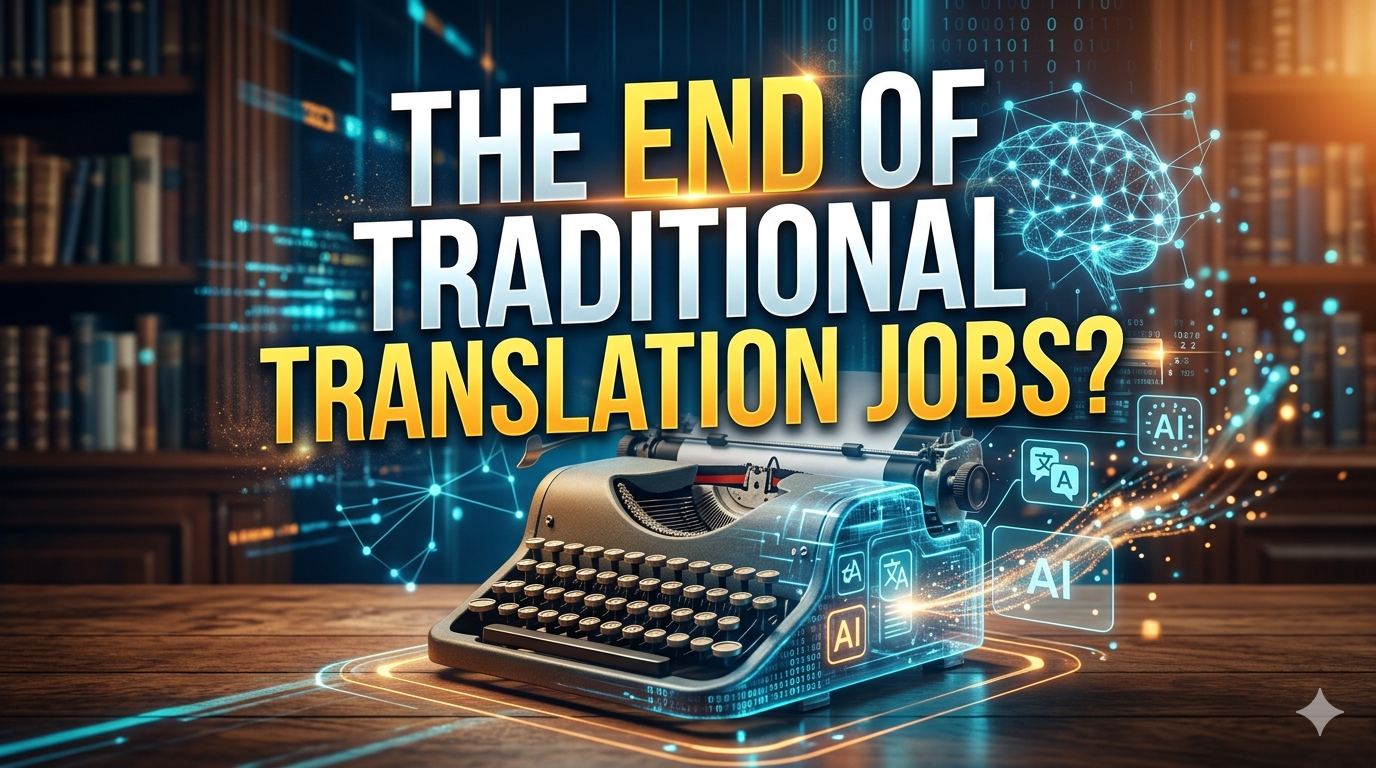
The translation industry is changing rapidly.
With AI tools like ChatGPT, DeepL, and Google Translate becoming more advanced, many professionals are asking:
👉 Are traditional translation jobs coming to an end?
It’s a serious question—and one that deserves a clear, honest answer.
In this article, we’ll explore what is really happening to traditional translation jobs and what the future looks like.
1. What Are “Traditional” Translation Jobs?
Before we answer the question, let’s define what we mean.
Traditional Translation Jobs:
- Manual translation from start to finish
- Per-word pricing model
- Focus on volume rather than value
- Minimal use of automation or AI
👉 This model has been the industry standard for decades.
2. The Short Answer
👉 Yes—traditional translation jobs are declining.
But:
👉 Translation itself is not disappearing.
This distinction is critical.
3. Why Traditional Translation Jobs Are Declining
① AI Can Handle Basic Tasks
AI can now:
- Translate simple texts
- Produce fluent sentences
- Handle large volumes instantly
👉 This replaces low-complexity work.
② Clients Expect More for Less
With AI:
- Faster turnaround is expected
- Lower prices are demanded
👉 The old pricing model is under pressure.
③ Increased Competition
AI lowers the barrier to entry.
More people can now offer translation services.
👉 This increases competition—especially at the low end.
4. What Is Replacing Traditional Jobs?
Traditional roles are not just disappearing—they are being replaced by new ones.
🚀 New Roles Emerging
- AI post-editor
- Translation quality specialist
- Localization strategist
- Language consultant
- AI-assisted translator
👉 The work is evolving, not vanishing.
5. The Market Shift: Volume → Value
The biggest change is economic.
Old Model:
- Paid for volume
New Model:
- Paid for expertise
👉 Value is now defined by:
- Accuracy
- Specialization
- Decision-making ability
6. Who Is Most Affected?
🚫 High Risk:
- General translators
- Non-specialized workers
- Those who avoid AI
🚀 Low Risk:
- Specialists (legal, patent, medical, finance)
- AI-enabled professionals
- High-level decision-makers
7. The New Reality of Translation Work
Translation is becoming:
👉 Less about typing
👉 More about thinking
Instead of translating every word, professionals now:
- Evaluate AI output
- Correct errors
- Ensure consistency
- Make strategic decisions
8. The Opportunity Behind the Change
Here’s the important part.
👉 This shift creates opportunity.
For those who adapt:
- Higher income potential
- More efficient workflows
- Greater professional value
9. Final Answer: Is This the End?
👉 Yes—for traditional jobs.
👉 No—for translators.
The profession is not ending.
👉 It is evolving into something more advanced.
Conclusion
The end of traditional translation jobs is not a crisis—it’s a transition.
Those who resist change will struggle.
Those who adapt will thrive.
👉 The future belongs to translators who evolve beyond traditional roles.






コメント