Introduction
The translation industry is undergoing a massive transformation.
With the rise of AI tools like ChatGPT, DeepL, and Google Translate, many professionals are asking:
👉 What does the future hold for translation jobs?
Will opportunities disappear—or evolve into something new?
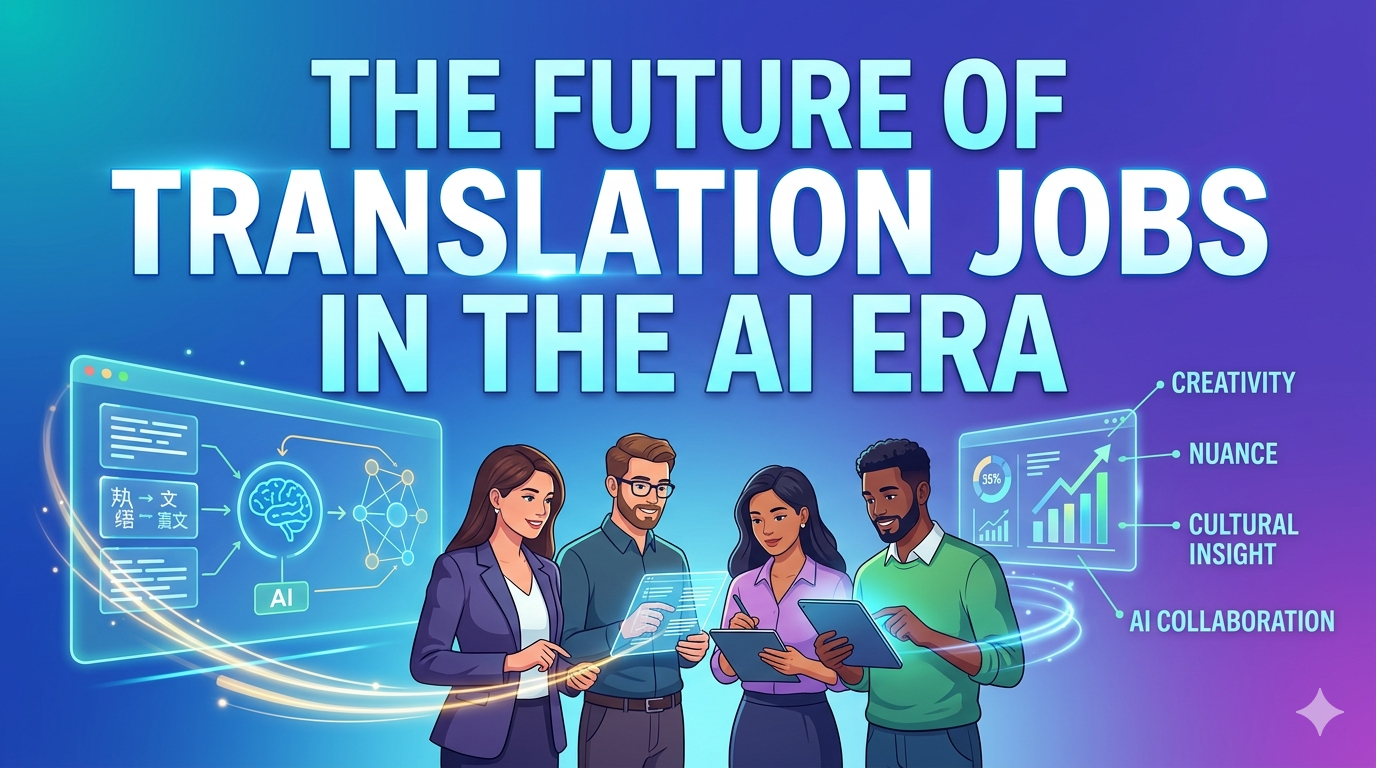
In this article, we’ll explore the future of translation jobs in the AI era, what roles are emerging, and how you can position yourself for long-term success.
1. The Translation Industry Is Not Shrinking—It’s Expanding
Contrary to popular belief, the demand for translation is not declining.
In fact, it is growing.
Why?
- Globalization is accelerating
- Digital content is exploding
- Companies need multilingual communication at scale
👉 AI is not reducing demand—it is increasing production capacity.
Which leads to a key insight:
👉 More content = more need for quality control
2. The Death of “Traditional” Translation Jobs
Let’s be clear.
The old model of translation is fading:
❌ Traditional Role (Declining)
- Translate everything manually
- Charge per word
- Focus on volume
This model is being replaced by AI-driven workflows.
3. The Rise of New Translation Roles
The future is not about fewer jobs—it’s about different jobs.
🚀 Emerging Roles in the AI Era
① AI Post-Editor
Refines AI-generated translations for accuracy and naturalness
② Translation Quality Specialist
Ensures consistency, compliance, and domain accuracy
③ Localization Strategist
Adapts content for culture, brand, and audience
④ Language AI Trainer
Helps improve AI models with domain-specific data
⑤ Meaning Architect
Focuses on structure, logic, and intent behind language
👉 These roles require thinking, not just translating.
4. High-Value vs Low-Value Work
The gap is widening.
🔻 Low-Value (Declining)
- Simple text translation
- Generic content
- Non-specialized work
🔺 High-Value (Growing)
- Patent translation
- Legal and contracts
- Financial reporting
- Medical and scientific content
👉 The future belongs to specialists.
5. The Skill Shift: What You Must Learn
To stay relevant, translators must upgrade their skill set.
🔥 Essential Skills for the Future
1. Domain Expertise
Become deeply specialized in a field
2. Structural Thinking
Understand logic, relationships, and meaning
3. AI Literacy
Learn how to use AI effectively (not fear it)
4. Decision-Making
Know when AI is right—and when it’s wrong
6. The Economic Reality: Income Will Polarize
The AI era is creating a split:
💸 Low-End Market
- Highly competitive
- Low pay
- AI-dominated
💎 High-End Market
- Fewer professionals
- Higher pay
- Expertise-driven
👉 Translation is becoming a “winner-takes-most” field.
7. The Biggest Opportunity: Leverage AI
Here’s the truth most people miss:
👉 AI is not just competition—it’s leverage.
Top translators in the future will:
- Work faster
- Handle more volume
- Deliver higher-quality output
👉 Result: Higher income with less effort
8. Final Outlook: The Future of Translation Jobs
So what does the future look like?
👉 Fewer low-skill jobs
👉 More high-skill opportunities
👉 Greater rewards for experts
Translation is not disappearing.
It is evolving into a more intellectual and strategic profession.
Conclusion
The future of translation jobs is not about survival—it’s about positioning.
Those who resist AI will struggle.
Those who adapt will thrive.
👉 The question is not whether translation jobs will exist.
👉 The question is: What kind of translator will you become?






コメント