Introduction
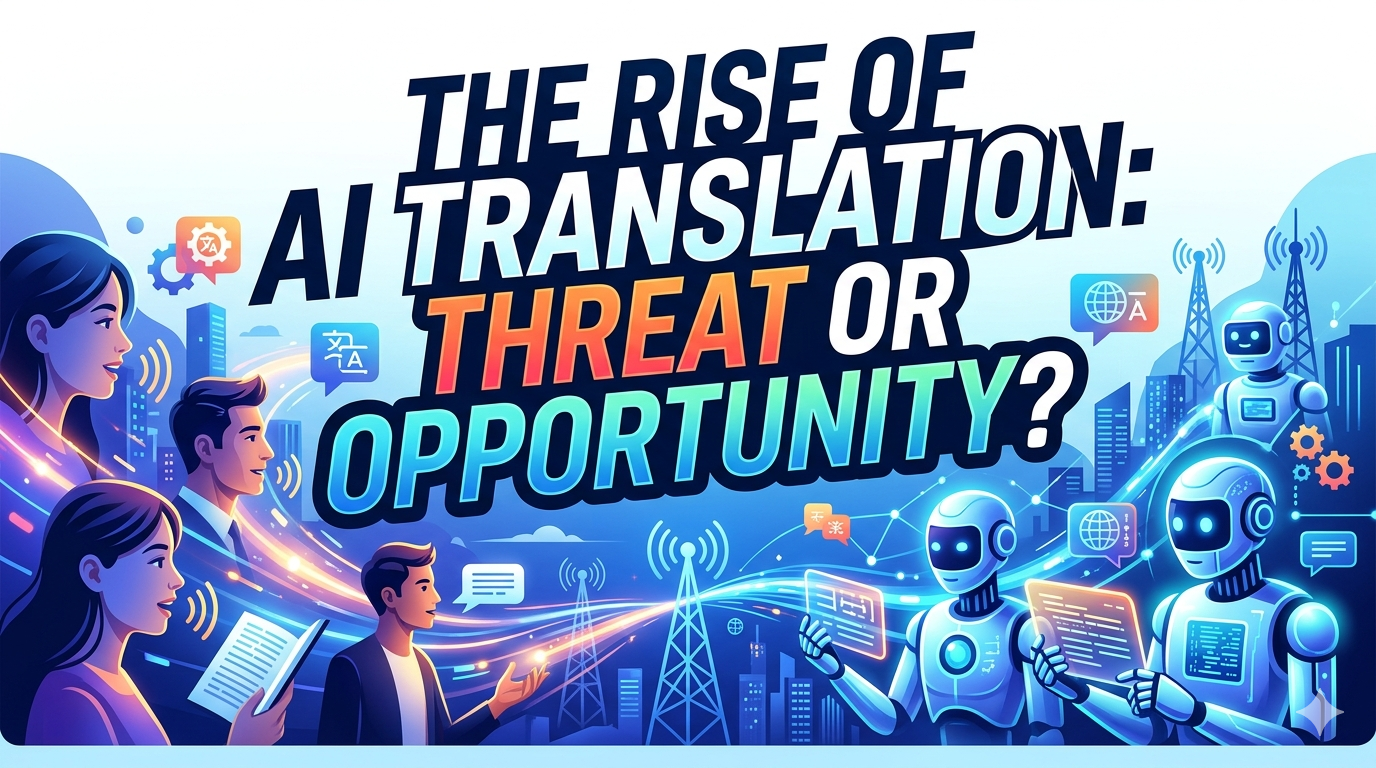
AI translation is advancing faster than ever.
With tools like ChatGPT, DeepL, and Google Translate producing near-instant results, many translators are asking:
👉 Is AI a threat—or an opportunity?
The answer depends on how you understand the shift.
In this article, we’ll break down the real impact of AI translation and show why this transformation can be the biggest opportunity for those who adapt.
1. The Rapid Rise of AI Translation
AI translation has evolved dramatically in recent years.
What used to be:
- Word-by-word translation
- Awkward phrasing
- Limited accuracy
Has now become:
- Fluent sentence generation
- Context-aware output (to some extent)
- Scalable multilingual production
👉 AI is no longer a “tool”—it’s an infrastructure.
2. Why AI Feels Like a Threat
Let’s acknowledge the reality.
AI does pose real challenges.
⚠️ Perceived Threats
① Job Replacement
Many fear losing work to automation
② Price Pressure
Clients expect faster and cheaper delivery
③ Lower Entry Barriers
Anyone can now produce “good enough” translations
👉 These concerns are valid—but incomplete.
3. The Hidden Opportunity Behind AI
Here’s what most people miss:
👉 AI does not eliminate translation—it changes the rules.
Key Shift:
From:
- Manual production
To:
- Intelligent supervision
This creates new opportunities:
🚀 New Possibilities
- Handle larger volumes
- Work faster with AI assistance
- Focus on high-value tasks
- Expand into new roles
👉 AI is a multiplier, not just a disruptor.
4. The Market Is Splitting in Two
The AI era is creating a clear divide:
🔻 Low-Value Segment
- Automated
- Low-cost
- Highly competitive
🔺 High-Value Segment
- Specialized
- Accuracy-critical
- High-paying
👉 The middle is disappearing.
This is why some translators struggle—while others thrive.
5. The Skills That Turn Threat into Opportunity
To benefit from AI, translators must evolve.
🔥 Critical Skills
① Domain Expertise
Become specialized in a field
② Structural Thinking
Understand meaning beyond words
③ AI Collaboration
Use AI effectively as a tool
④ Decision-Making
Know when to trust—and when to override AI
6. Real-World Example: How AI Changes Work
Before AI:
- Translate everything manually
- Limited output
- Time-intensive
After AI:
- AI generates drafts
- Human refines and validates
- Higher productivity
👉 Same translator, more output, more value
7. The Psychological Barrier
The biggest obstacle is not AI.
👉 It’s mindset.
Some people:
- Resist change
- Fear technology
- Stick to old methods
Others:
- Adapt quickly
- Learn new tools
- Redefine their role
👉 The difference determines success.
8. Final Answer: Threat or Opportunity?
So, what is AI translation?
👉 Both.
- A threat to outdated skills
- An opportunity for adaptive professionals
Conclusion
AI is not the end of translation.
It is a turning point.
Those who see it as a threat will struggle.
Those who see it as an opportunity will lead.
👉 The future belongs to those who evolve.


コメント